Microorganisms as treatment partners
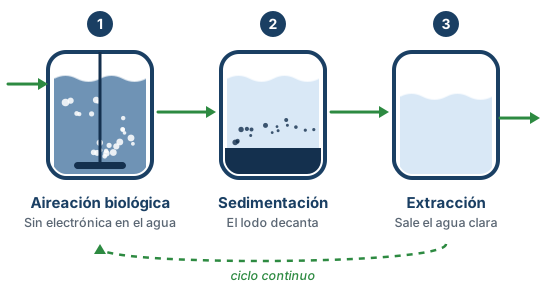
Billions of bacteria live in your plant and break down the organic matter in the wastewater. Food scraps, soaps and faeces are turned into water, carbon dioxide and a small amount of sludge. These bacteria need oxygen to work efficiently, which is why the plant is aerated.
Biofilm on the carrier material
The bacteria settle as a thin film on a carrier material that either floats in the water or is fixed in the plant. This biofilm is the real heart of the plant. It grows with the load and regulates itself.
Aeration is the key
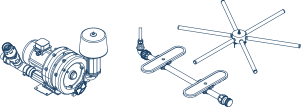
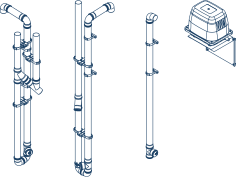
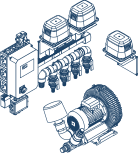
A compressor continuously blows air through fine diffusers into the tank; tiny bubbles rise and enrich the water with oxygen. Without this aeration, the bacteria would work anaerobically, more slowly and producing foul-smelling gases. With aeration the process runs cleanly and without odours.
The sludge cycle
The biological process produces small amounts of surplus sludge, which settles at the bottom and is removed periodically. During maintenance, part of this sludge is pumped out and the rest stays in the tank as a seed population. That way the biology keeps working straight away after every maintenance visit.
Why it works
As long as there is oxygen and the plant is correctly sized, the biology runs stably for decades. It is not sensitive to the normal fluctuations of a household; it copes calmly with load peaks and breaks. Why it stays odour-free is explained in our dedicated article.
Water back in its cycle, without chemicals
All of this happens with nothing but microorganisms, oxygen and well-designed technology. In Chile and across South America, many plants still run on chemicals or are just a simple septic tank; a biological plant needs neither.
What leaves the plant is water, with no chlorine and no additives. And it stays that way over the years; it will be no different ten years from now. The water returns to its cycle and nature stays in balance.